ab·sti·nence n.
1. The act or practice of refraining from indulging an appetite, as for food.
2. Abstention from alcoholic beverages.
[Middle English, from Old French abstenance, from Latin abstinentia, from abstinns, abstinent- present participle of abstinre, to hold back. See abstain.]
fast intr.v. fast·ed, fast·ing, fasts
1. To abstain from food.
2. To eat very little or abstain from certain foods, especially as a religious discipline.
n.
1. The act or practice of abstaining from or eating very little food.
2. A period of such abstention or self-denial.
A little while back, when I was last in Whakatane, I found a copy of the Book of Common Prayer in the local second-hand store, so decided on a whim to splash out (10c) and buy it. It’s been sitting on my desk, unloved since then.
But today I decided to look at it. A confusing wee book it is, intended no doubt or those scholarly Pastor types, and not designed to be easily digested by a DVD junkie.
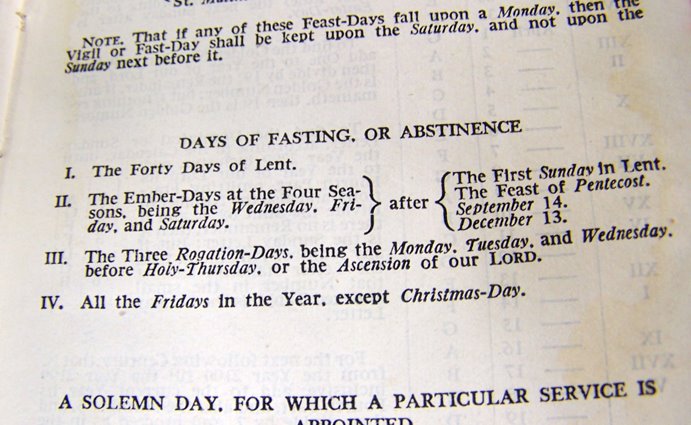
I did find something though that seemed straight forward on page 31: Days of Fasting or Abstinence.
It appears that ‘All the Fridays in the year, except Christmas Day’ (who would want to fast on that day!) are supposed to be a day of fasting.
Gulp.
That’s every Friday. Once a week? That must be a mistake right? Or does this just apply to the Church of England? (though I can’t remember any Sunday School stories back in the day about fasting on a Friday).
I think I’ll just have to ignore page 31 unless some scholarly person can shed some light on the history or significance of Friday fasting.

 A recent survey of Left Behind readers uncovered a surprising demographic: Almost a quarter of people who’ve read or are reading Left Behind are not Christians – they hold other beliefs including Islam and Buddhism.